
The story Scientific American wouldn't let me tell
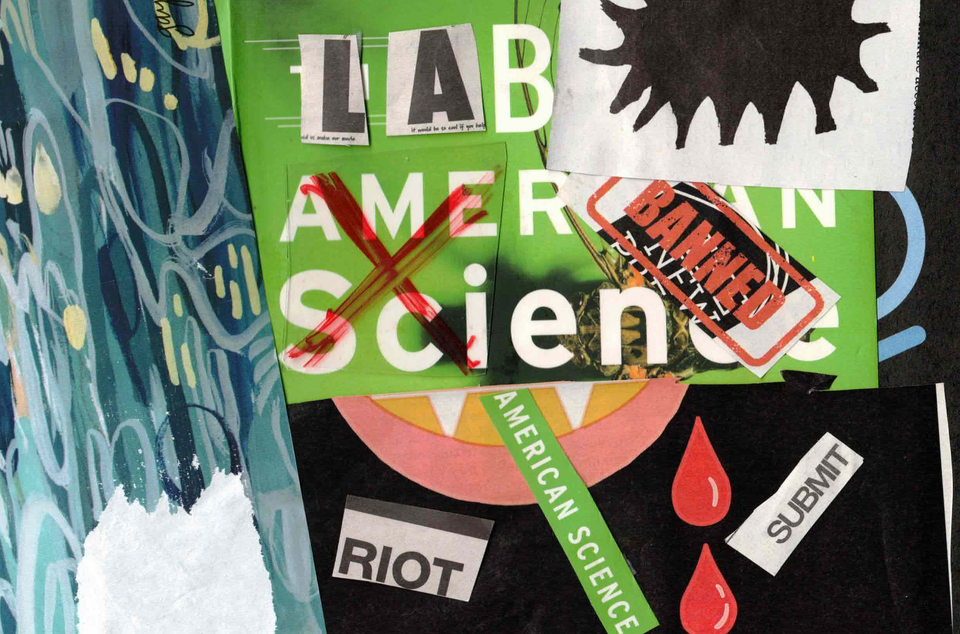
Sometimes people ask me how to get contracts with prestigious publications like Scientific American. When I tell them, they usually say it doesn’t sound worth it. They’re right.
For ordinary journalists like me—experienced but not famous—just getting a contract with a prestige magazine requires quite a bit of free labor. The process is always more or less the same. I submit a pitch—if the editor likes it, they send me back to the drawing board to tweak it so it better fits the magazine’s needs—once, twice, three times. Finally, if all goes well, I’ll get a contract for a flat rate. For investigative reporting, I’ve learned the hard way that even if the rate looks good, it will pan out to minimum wage or less because investigations require so much digging, editing and legal review.
But even this flat rate is not guaranteed. You can have travelled, pounded the pavement, gotten the story and written multiple drafts, and still only get a kill fee, usually 20-30% of the full fee. Publications can do this even if the content that you’re publishing is urgent, even if it’s about a health crisis that is actively killing people at this very moment.
This is exactly what happened when I pitched a story to Scientific American about dangerous new adulterants in the fentanyl supply. When they finally commissioned the story for a modest flat rate I felt a familiar feeling of excitement and validation mixed with pre-emptive fatigue and dread. Who knows what they’d expect of me for that fee.
Shortly after I submitted my first draft, one of my sources, Chris, was put into an induced coma after a heart attack related to withdrawal from adulterated fentanyl. This was his second such heart attack—the first had been a main topic of our interview. When I got this news, I felt a wave of sadness, then a cold wave of anxiety. It didn’t feel good to know Chris’s life was hanging in the balance, and have no idea when I’d be able to share his story. I wrote to my editor, urging her to prioritize this reporting. She agreed.
A couple days after that, I learned that Chris had died. I let tears fall as I revised my latest draft. A week later, my editor emailed me. She informed me that she was no longer working with SciAm, effective immediately. LabX Media Group, which is connected to a scientific equipment marketplace, had acquired SciAm. She had been laid off.
SciAm’s staff was in the process of unionizing, reportedly in part to "demand editorial freedom from corporate control," when Springer Nature sold the publication, thus avoiding negotiations altogether. The acquisition came with many layoffs. Those who remained had to take significant pay cuts. The excitement I’d felt about writing for one of the oldest scientific publications in existence was suddenly tainted. Springer Nature's choice to offload SciAm felt like part of a greater surrender to the current siege against American science.
Plus, at this point I knew the chances my story would even get published had dropped significantly, and I'd have to take the kill fee. But I held out hope that the new leadership would see the importance of the story. I considered trying to pitch elsewhere. But if I did, I’d be violating my contract.
It feels weird to talk about death and getting paid to write about it at the same time. But the reality is, the burnout rate for this type of work is high even for people with a guaranteed salary. Something had to change if I was going to keep going.
In the weeks that followed, I got a few emails from the remaining SciAm staff as they passed my draft around. Finally, I received one of those dreaded feedback emails that’s just a wall of text—its contents dismantled every part of my agreement with my original editor. As I read through it, I realized increasingly that I’d better hope they kill the story, which would mean I'd get the rights back. Even though I’d only make a few dollars an hour, this was now the best case scenario.
Because this new editor was insisting I get Chris and Brandie’s real last names. Before I even began my reporting, I had carefully explained to my original editor the importance of allowing sources to be completely anonymous, if that’s what they want. How using full names or photographs can affect their reputation and ability to be employed in the future. I asked Chris and Brandie what level of anonymity they preferred, and I think it was brave of them to give me permission to use their real first names.
When someone does me the favor of agreeing to an interview about something that is so stigmatized, the last thing I want is to repay them by making their life harder. There will be cases when people decide, on their own, that revealing their full identity is worth it. But that should be their choice, nothing that a reporter pressures them into—even if they’re doing it because they’re also under pressure from an editor.
My new editor tried to retroactively impose other new rules on my reporting—insisting that Chris and Brandie’s interviews were only usable if they had been “clean and sober” when they talked to me. To follow this requirement would mean effectively erasing the people with the most at stake from the narrative. I had been noticing, recently, how rare media interviews about active drug use have become. Recovery perspectives are valuable. But the stakes are inherently different for someone still living at the mercy of the illicit drug supply.
To understand opioid addiction is also to understand that the concept of "sobriety" changes with context. People who are truly addicted to fentanyl rarely get high when they take it. Instead, it helps them maintain a baseline that allows them to function. Someone who actively uses opioids will be much more coherent and able to consent when they’re not in mind-numbing pain from withdrawal. That said, of course I would avoid quoting someone who is visibly intoxicated. Chris and Brandie, however, described the toll of the tainted drug supply with heartbreaking lucidity.
As Zach Siegel, another reporter on this beat, pointed out in his Substack, publications are devoting less and less space to drug coverage in general, and what does make the cut is increasingly dehumanizing. This shift directly maps onto the second Trump Administration’s recent policy choices, attacking housing and harm reduction in favor of criminalization and militarization. To me, insisting on sobriety as a condition for interviews also goes against the grain of harm reduction—a philosophy that recognizes the humanity of people who use drugs whether or not they eventually choose abstinence.
The new editor had given me one thing for which I was wryly grateful: an easy way out. She told me my reporting was far too narrow (adding, rather condescendingly, that it would be a great “local news” feature) and that I needed to make the scope national. My first pitch had in fact been national—I’d landed on a Pittsburgh focus with my original editor during our long workshopping process. And I thought that narrowing the scope was actually a great judgement call on her part. A national overview piece would have felt less urgent, more diluted.
I had already done three weeks of full time work for what amounted to around minimum wage. It was unreasonable to expect me to change the story this much for no extra money. I emailed and said if they wanted that much extra reporting, I'd need additional compensation. I knew that would lead them to kill the story. The next day, I found out I was right.
Although this was the best outcome under the circumstances, I was still incensed. I tried, uselessly, to argue that I’d written the story I was hired to write, and that I should still be paid accordingly. They pointed out that the contract allows them to kill the story for any reason, which was true. I’d agreed to a highly exploitative contract, with the typical rationalization. It’s just one contract. The byline will be worth it.
As disappointing as this whole experience was, it gave me something. My path forward was suddenly clear. I wasn't going to let this story go, and publishing it on my own platform was the only way I could reliably prevent more industry surprises from slowing things down. Plus, if I didn’t step away from legacy media, I was going to become burnt out on compromises.
The climate for this beat is only getting worse. Journalism, in general, is in free fall. Media executives increasingly seem to think that devaluing their writers and editorial staff will save them. The acquisition of SciAm is one example of this. The declining pay for freelancers is another. But when has an industry ever turned itself around by illustrating to the world, repeatedly, that it doesn’t value its main product?
I’d been weighing the idea of really committing to an independent platform for months. One of the main things that held me back was the fear of investing time without a guaranteed paycheck. SciAm killing the story meant that I’d have to take money out of the “pro” column for continuing to work with legacy outlets. If I’m going to continue to do scientifically complex, often heartbreaking reporting for precarious financial gain, I should at least do it on my own terms. I devoted the first issue of What’s It Like? to Chris, something I probably couldn't have done with a traditional outlet. For the second issue, I used the reporting I’d intended for SciAm.
This is my experiment. My hypothesis is that audiences do, in fact, value respectful and scientifically careful reporting about people who use drugs. Whether I’m right is up to you.
Want to stay up to date on drug analysis? Subscribe now!
Found this useful? Share it: