
The delicate science of getting THC into drinks

Find drug science fascinating? Get more of it in your inbox with a free subscription to What's It Like?
When you take a sip of a THC beverage, you’re probably not thinking about how every mouthful contains tiny, carefully engineered droplets of oil that are all working together to get you high. As anyone who has dabbled in the art of culinary cannabis ought to know, THC is fat soluble but not water soluble, so the THC beverage industry had to find a way to blend water and oil.
The answer is something called a nano-emulsion— a formula of teeny tiny THC infused oil droplets, as well as chemicals that keep those droplets stable. A well-calibrated emulsion diffuses THC evenly and smoothly throughout your drink, so that every sip is the same. Alexander Choi and Liam Rigney, the founders of Perfectly Dosed, a Chicago-based emulsion company, have been working to improve this technology since they launched in 2022.
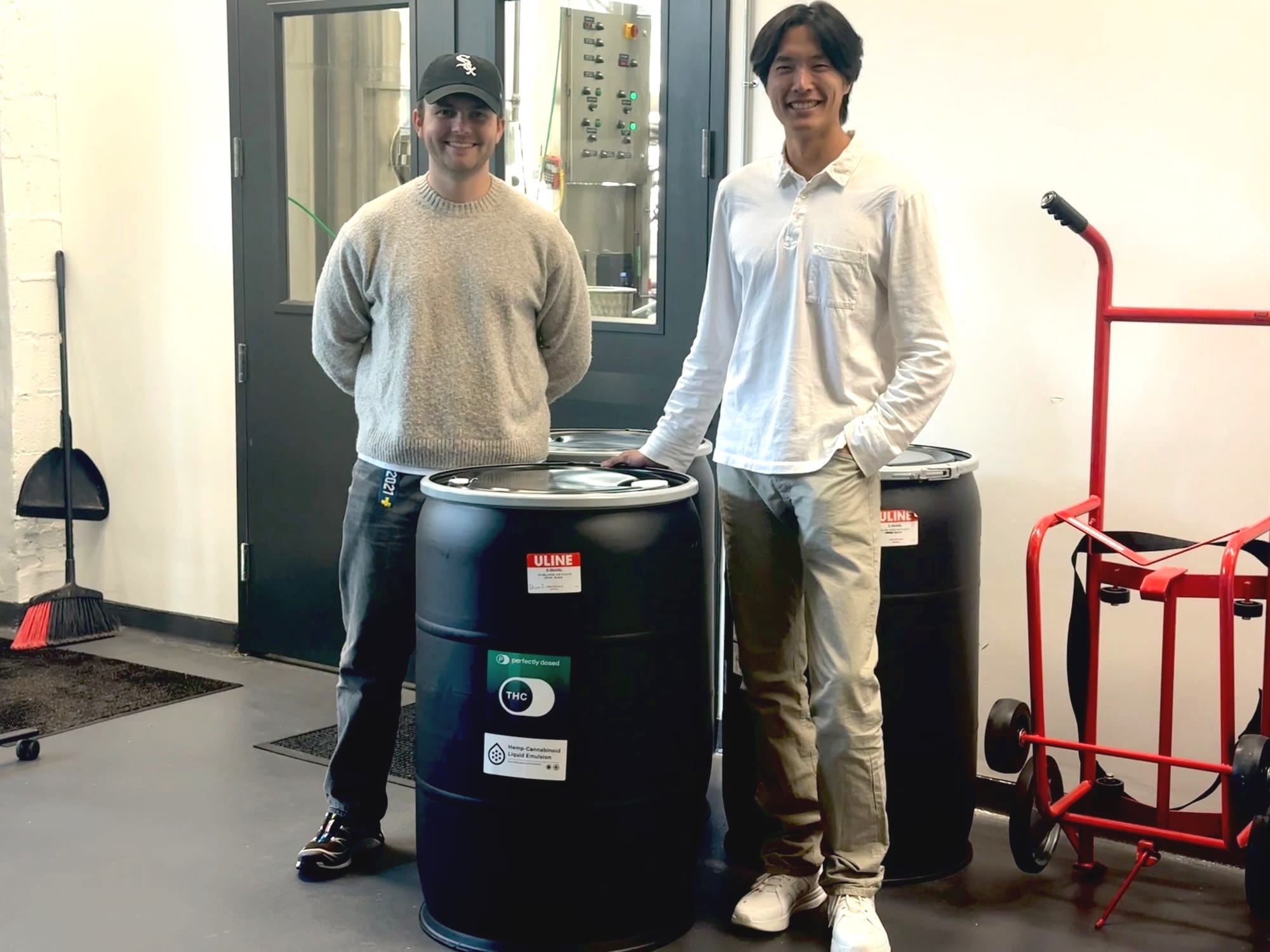
“That consistency from sip to sip, from bottle to bottle, or can to can, and batch to batch is really important for the consumer experience,” Rigney, Perfectly Dosed's VP of business development said, as he explained the company’s mission. A lot of people now experience THC for the first time as a beverage, Rigney said, so ensuring products are predictable and enjoyable is key.
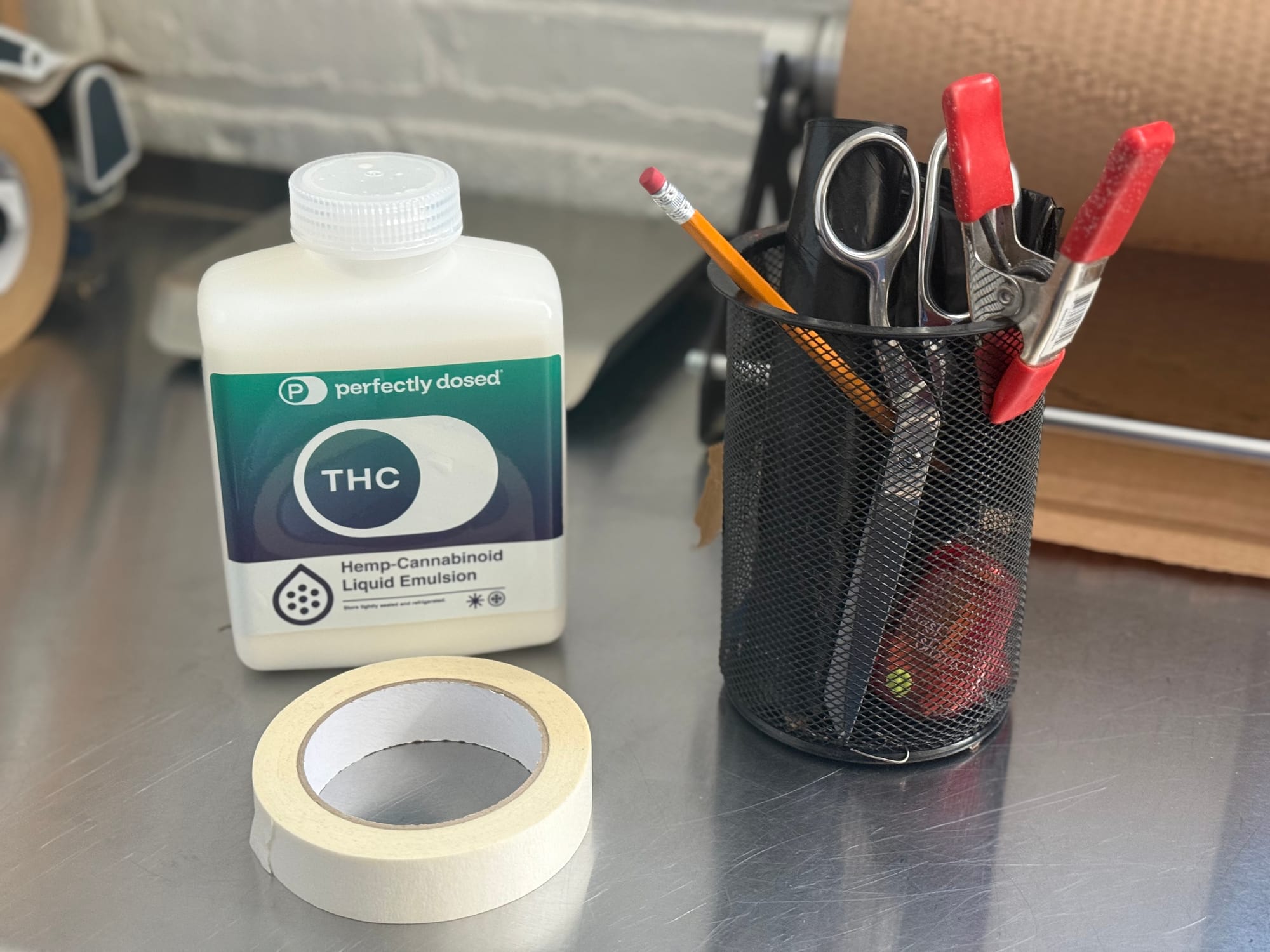
I visited Perfectly Dosed at their Chicago headquarters for the first time in October. The address surprised me—they'd taken over the space once occupied by Ørkenoy, a former restaurant and microbrewery I used to enjoy. I was amazed to learn how much THC can fit into a small space. A liter bottle they showed me contains 50,000 milligrams. Perfectly Dosed manufactures a significant chunk of the THC that goes into drinks all around the country—in a factory that was once a modestly sized restaurant with a single dedicated brewing tank.
As Choi, Perfectly Dosed's CEO, was showing me around, he pointed out that the tank was still there—they’d retrofitted it into a water purification system, complete with UV lights to zap bacteria. They use the brewery's former boil kettle as a mixing vessel. “We still view this as pilot scale,” Choi said, explaining he expects demand for THC emulsions to skyrocket once legislation surrounding the federal hemp ban is “resolved.” In early October, Choi and Rigney were optimistic that both Illinois and federal hemp bans, set to go into effect in November and December, respectively, would be replaced with alternative legislation so their operations could continue. The Illinois ban is now effective tomorrow, so they’ve had to press pause on THC production.
They’re still relatively confident that Congress will eventually re-authorize THC beverages, and that the time they’ve spent perfecting their emulsions won’t go to waste. Talking to Choi and Rigney, I realized that manufacturing THC drinks comes with challenges I would never have thought of. There’s a chemistry-related reason so many THC seltzers tend to have such similar—and, if we’re honest, unmemorable—flavors. Also, if you’ve ever had a THC drink that felt weaker than you expected, it turns out the can you were drinking from may have stolen part of your high. (You read that right, the THC can get stuck to the inside of your aluminum can.) Keep reading to find out why.