
As medetomidine spreads nationally & globally, new advice on keeping patients safe
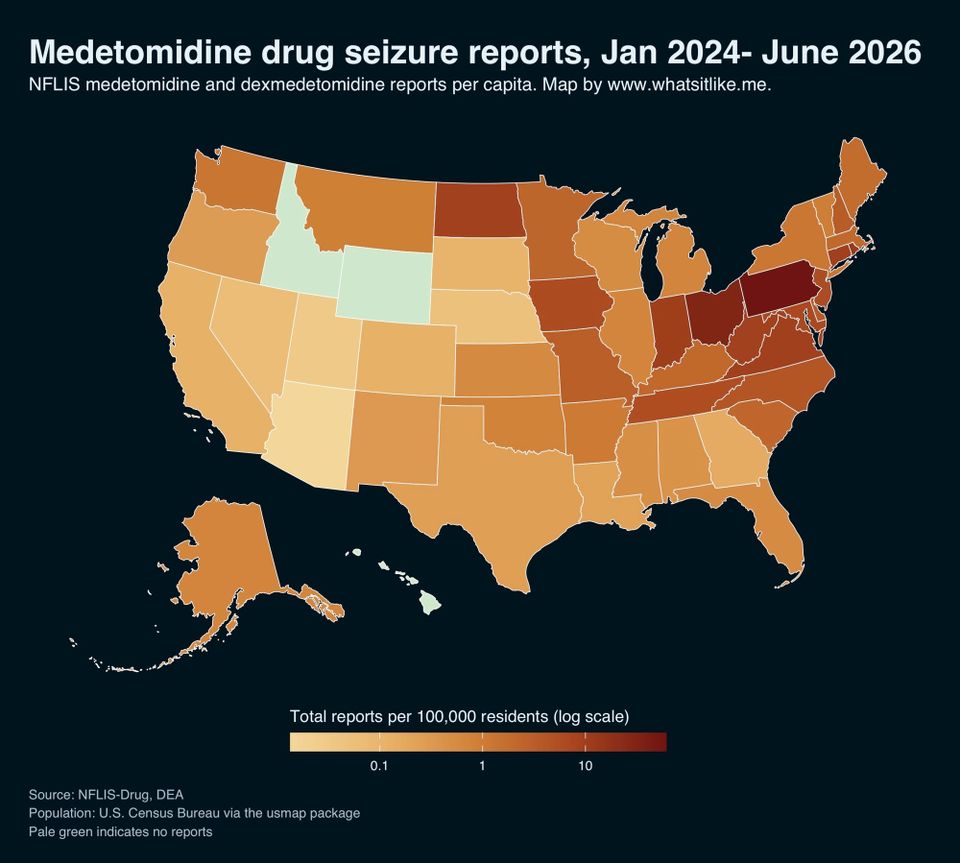
Medetomidine, a powerful tranquilizer and alpha-2 agonist that causes life-threatening withdrawal, has now been found in the illicit drug supply in at least six countries and 47 US states, according to DEA data. Dr. Michael Lynch, one of the leading experts on illicit medetomidine, published new information about how to handle it last week.
Just in the last month, San Diego, California, Pictou County, Nova Scotia and Canberra, Australia all issued new alerts about medetomidine in the illicit drug supply. Pennsylvania has been the epicenter of the withdrawal crisis since it first erupted in 2024. Dr. Lynch is a toxicologist and emergency medicine physician at the University of Pittsburgh Medical Center, who has been working tirelessly to figure out how to treat this unfamiliar withdrawal syndrome and share his findings with others. Most recently, he worked with other researchers to prepare new clinical considerations based on available medetomidine research, that can help guide doctors around the world as more of them encounter illicit medetomidine. Read the full document here, and join Dr. Lynch for a webinar on December 1.
Below are highlights based on the document and my conversation with Dr. Lynch. Paid subscribers can access an up-to-date geographical analysis of medetomidine trends, and an in-depth Q&A with Dr. Lynch.
- Use naloxone, but don’t expect it to wake people up
- Street medetomidine is almost always mixed into street opioids, like fentanyl. That means that bystanders should still administer naloxone.
- However, too much naloxone can lead to precipitated withdrawal—which is agonizing and could cause unconscious patients to choke on their own vomit.
- Naloxone should therefore only be given until breathing is restored. Rescue breaths can help ensure the patient is getting enough oxygen.
- Don't be afraid to give unusually high doses of alpha-2 agonists to medetomidine withdrawal patients
- Medetomidine is a powerful alpha-2 agonist, and other alpha-2 agonists are the primary medications that doctors are using to treat medetomidine withdrawal. Clonidine and guanfacine, common prescription medications, are useful for milder cases of account withdrawal, as well as long-term management. Dexmedetomidine, which is the active component found in street and veterinary medetomidine, is a controlled medication typically only available as an IV drug in the ICU, and it is the best known tool for severe medetomidine withdrawal.
- The recommended doses may sound alarmingly high, but Lynch said he’s continued to escalate doses since he began treating medetomidine withdrawal. He’s seen that high doses work better and don’t hurt patients.
- Learn to recognize the signs of combined opioid and medetomidine withdrawal, and treat both
- Opioid and medetomidine withdrawal symptoms overlap.
- One way to determine whether medetomidine is involved is to ask patients how recently they last used illicit fentanyl, because medetomidine withdrawal can occur within hours of last use.
- Medetomidine-specific symptoms exist, but are not always present. They include:
- Dystonia, or sudden muscle rigidity.
- Posterior Reversible Encephalopathy Syndrome—essentially temporary brain damage.
- Lynch has also seen the “brain zaps” What’s It Like? previously reported were a near-universal symptom of medetomidine withdrawal. While they're not linked to a specific clinical term, they’re consistent with the “overactivation" medetomidine withdrawal causes, Lynch said.
- Healthcare settings with limited resources, including in carceral settings, should have a medetomidine plan.
- For patients going through milder acute medetomidine withdrawal, ensure high quantities of the relevant medications, like clonidine and guanfacine, are in stock.
- Be prepared to transfer severe withdrawal patients to better equipped hospitals. This means having agreements with those hospitals ahead of time, as well as logistical plans for emergency transportation.
- Abstinence should not be a requirement for continued medical treatment, as this can increase fatality risk.
- Treatment that reduces exposure to illicit medetomidine can help patients stay alive, even if they are unable to completely quit.
Where in the world is medetomidine now?
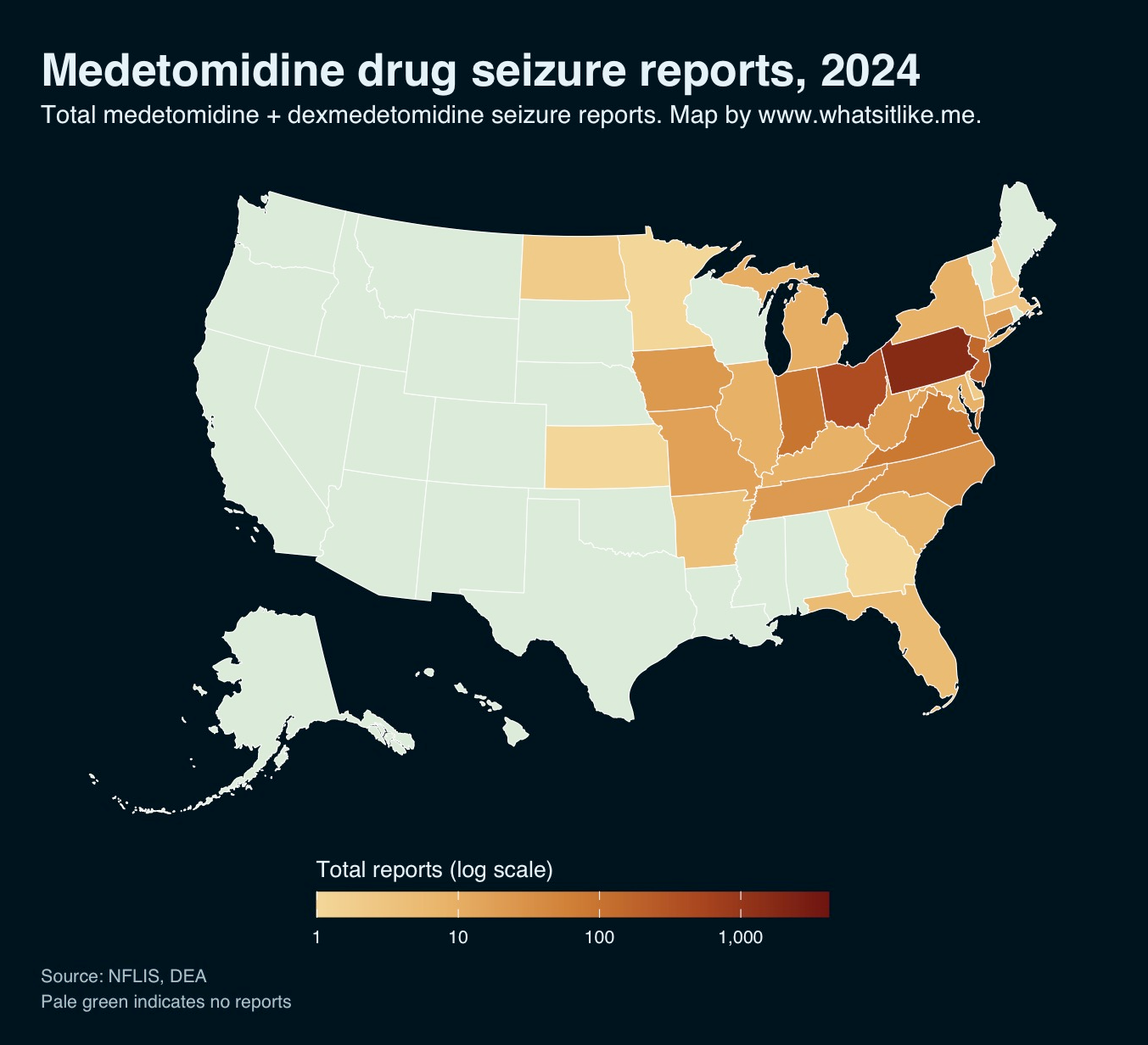
CDC previously reported that all 20 US sentinel sites saw medetomidine in their opioid supply in 2025. What's It Like analyzed DEA seizure data from the National Forensic Laboratory Information System (NFLIS) and found that medetomidine has been reaching more and more of the US.
In 2024, the western half of the country was still free of medetomidine, according to NFLIS data.
In 2025, however, it had spread to nearly every state, including Alaska.